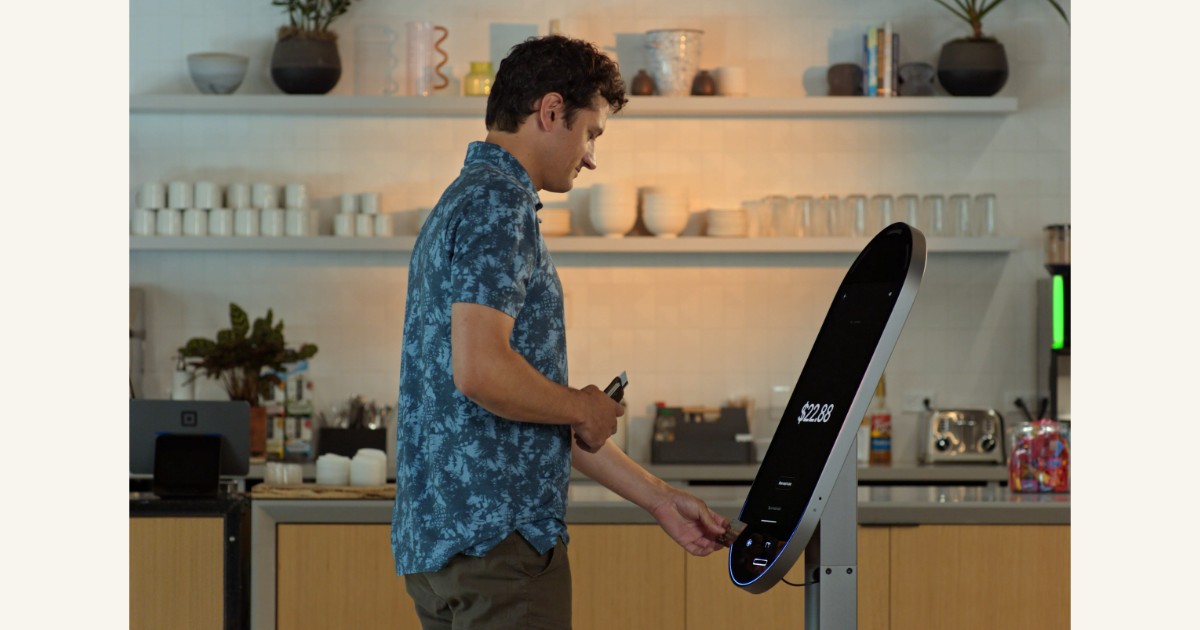
Square launched a new standalone restaurant kiosk October 14 with a 21.5-inch touchscreen and a conversational voice layer that can answer menu questions, suggest items and accept spoken modifications or substitutions. The company is positioning the device as an alternative to touch-only self-ordering, especially for quick-service restaurants under peak-hour labor pressure.
The hardware is available now for $1,999, including a counter stand, plus a $99 monthly software fee per device. Square says the final hardware price varies by mount. Use also requires an active Square Plus plan at $49 per location per month or Square Premium at $149 per location per month. Those costs should be evaluated together, not as a $1,999 one-time purchase.
The kiosk includes integrated contactless and chip payments, a barcode scanner and presence detection that can greet a guest approaching the screen. Customers can move between voice and touch during the order and optionally check into a Neighborhoods profile or Square Loyalty account.
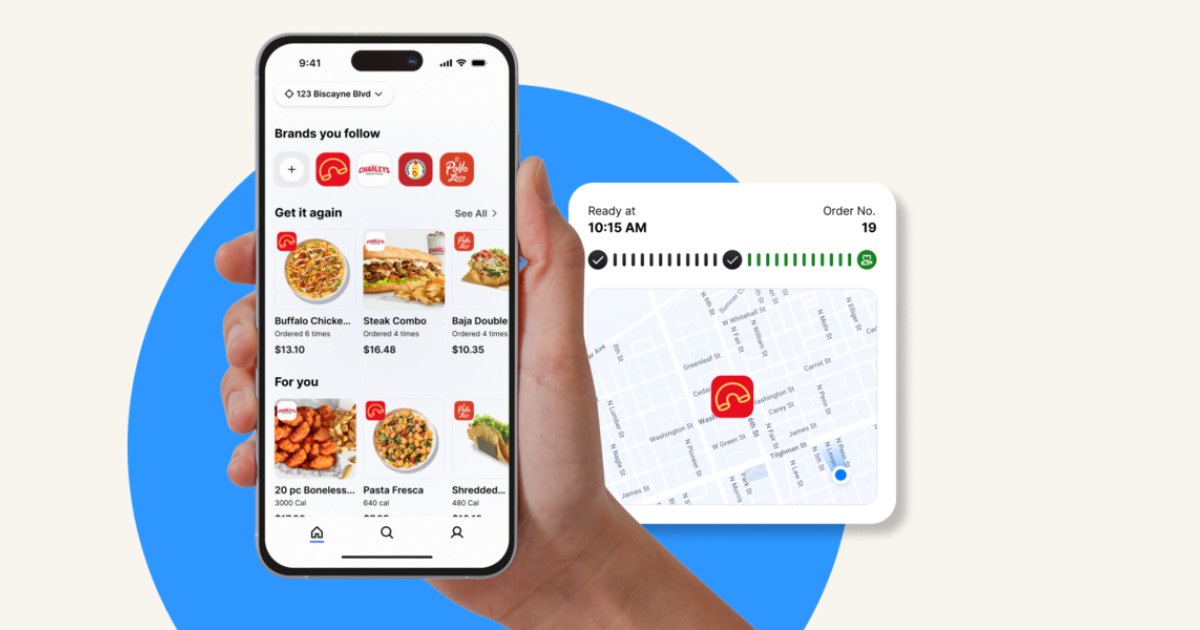
Square says its AI can use the restaurant’s menu and contextual signals—such as popular items at that location, time of day and products already in the cart—to answer questions and surface add-ons. Those are vendor-described capabilities, not independently measured results. Square did not publish a controlled study showing changes in speed, average check, labor hours or order accuracy for this new model.
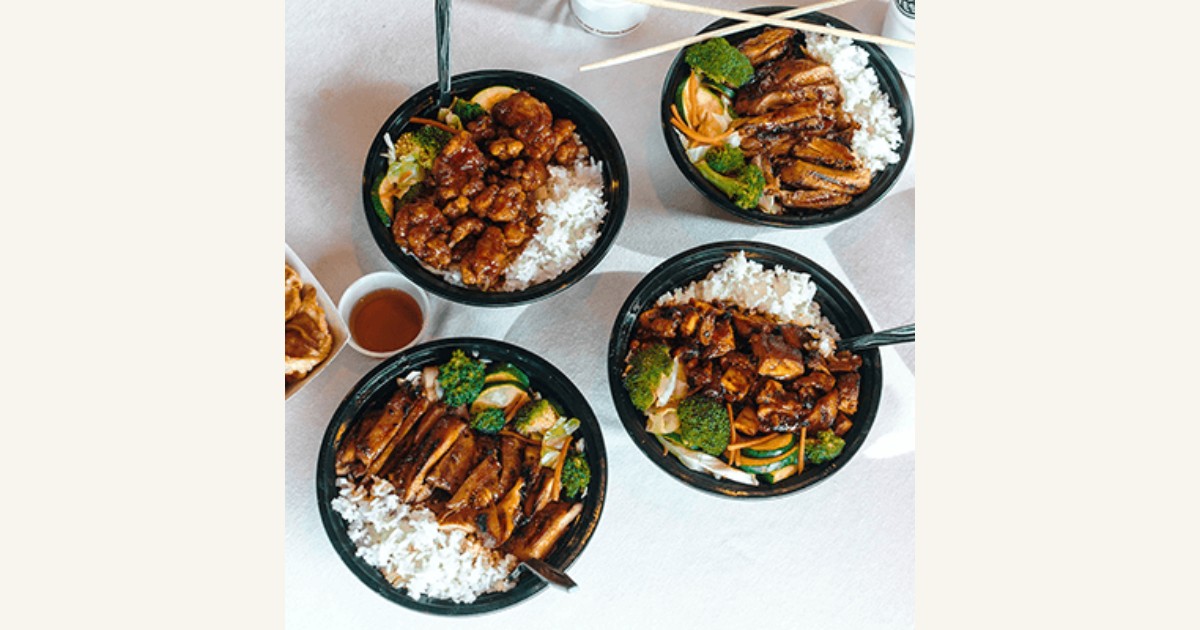
Two operator testimonials offer early evidence but not a systemwide benchmark. Boba Nation Grand CEO Baltej Sra said the kiosk had performed well in test locations and that the company plans to bring it to the rest of its locations this year. L&L Hawaiian BBQ franchisee Lawrence Kam said customers used the device more than he expected and that it let his team focus on other work. Square did not disclose the number of tested restaurants, transaction volume or before-and-after operating data.
The setup documentation also surfaces important limits. The new kiosk does not support cash or offline payments, requires a stable internet connection for payments and voice ordering, and is designed for indoor use only. A restaurant also needs at least one active point-of-sale device running the Square POS app.
Those constraints shape the real business case. A voice interface may reduce the need for staff to explain a large menu, but the restaurant still needs a fallback for cash customers, outages, accessibility needs and questions the model cannot resolve. The kiosk changes where labor is deployed; it does not eliminate service design.
Square is also rolling out a multi-account solution for franchise organizations to manage menus, reports and gift cards while allowing individual franchisees operational autonomy. That may prove as important as the new screen. Hardware can scale only if a chain can govern menus and data across locations without rebuilding the system store by store.
The strongest Braisepoint angle is total-cost discipline. The headline capability is voice AI, but the purchase decision is a bundle of hardware, plan fees, per-device software, networking, mounts, menu maintenance and staff workflows. Operators should measure throughput, attach rate, intervention rate and guest abandonment before expanding beyond a pilot.
The new kiosk is a meaningful step beyond a static digital menu. Whether it becomes a better restaurant employee tool depends on the less glamorous work around it: clean menu data, reliable connectivity, clear escalation and a financial model that beats the counter process it replaces.