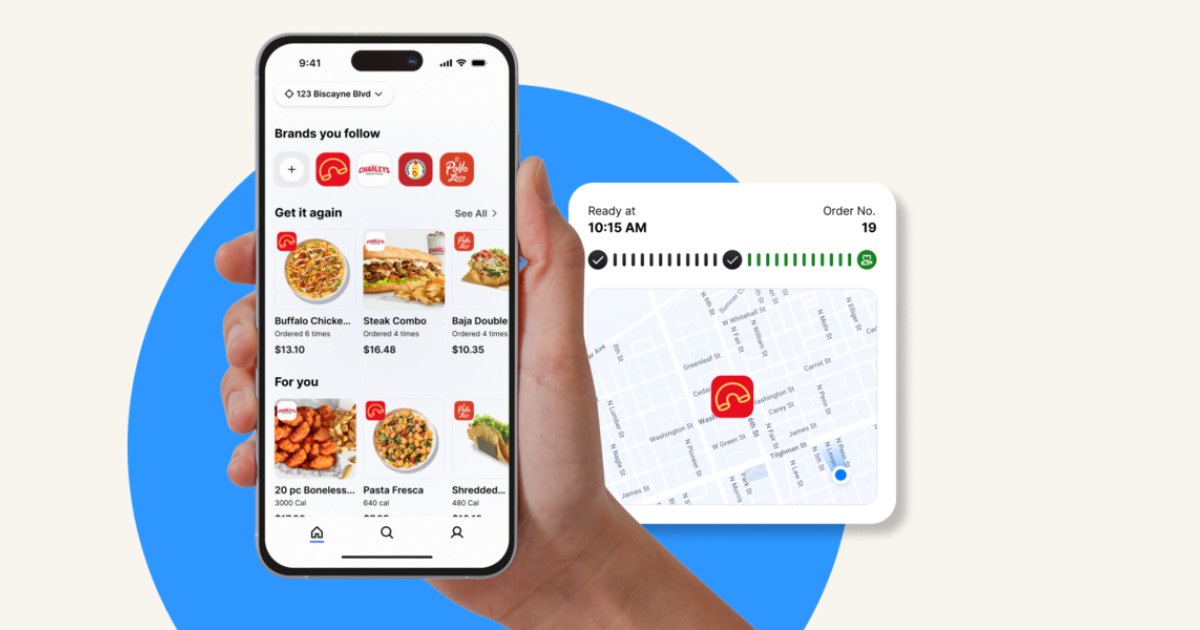
Olo launched its consumer ordering app nationwide on Tuesday, October 20, giving diners one place to find participating restaurant brands, place pickup or delivery orders and track them. The restaurant-technology company is positioning the app as a middle ground between a brand’s own ordering channel and a third-party marketplace.
The most important economic claim is on the restaurant side: Olo says restaurants pay no commission on orders placed through the app. Orders flow through the Olo Ordering API that participating brands already use, without a new dashboard, hardware installation or restaurant workflow. Olo also says guest data flows back to the restaurant as it would on a direct order.
That does not make an order fee-free for the guest. Olo’s consumer FAQ says every order includes a 5% Olo Network Fee. A restaurant may add a delivery fee when delivery is selected, and taxes still apply. The company says the full price summary appears before checkout.
The distinction matters because Olo’s launch page emphasizes that the restaurant’s menu price is the price displayed in the app, with no additional menu markup. A no-markup menu and zero restaurant commission can coexist with a customer fee. For an apples-to-apples comparison, diners need to look at the final checkout total rather than the item subtotal alone.
The app supports both pickup and delivery, but availability depends on the brand and location. Olo calls the service nationwide, which means the app can be downloaded and used across the country; it does not mean every restaurant, every address or both fulfillment modes are available everywhere.
Discovery works differently from a marketplace auction. Guests can follow favorite brands, search by name or browse nearby restaurants on a map. Olo says sponsored placement does not determine the order of the feed. The restaurant-facing product page says the app is intended for occasional customers who may not download an individual brand’s app, not as a replacement for first-party channels.
For operators, the launch is less about another icon on a phone than control of the relationship. Olo is trying to aggregate consumer demand without taking the 15% to 30% restaurant commissions it says are common on other delivery apps. Its trade is explicit: Olo charges the guest 5%, while the restaurant keeps the direct-order economics and customer data.
Olo says its platform already powers more than 3.5 million orders per day across more than 800 restaurant brands and more than 90,000 locations. Those are company-reported network figures, not the launch-day footprint of the consumer app. The company has not published a complete count of restaurants visible in the app on day one.
The practical test is whether a multi-brand experience can create incremental orders without teaching customers to bypass restaurants’ owned channels. Restaurants gain exposure and data; consumers gain one account and restaurant menu pricing; Olo gains a network fee on every order. That three-way structure is the business model to watch.
For now, operators should verify how their profile, menu, fulfillment settings and support instructions appear in the consumer app. Customers should verify the final fee summary and the restaurant responsible for changes, refunds or missing items. Olo’s FAQ directs those order issues back to the restaurant.