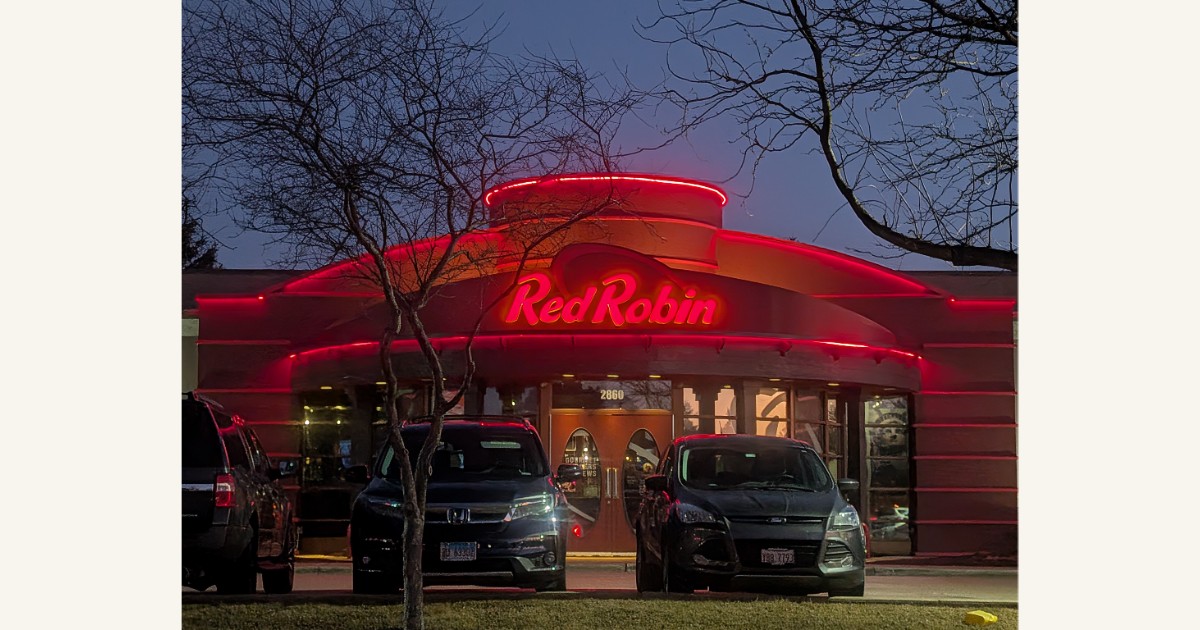
Red Robin completed three refranchising transactions covering 108 company-owned restaurants during its third quarter, generating approximately $89.4 million in aggregate cash proceeds before customary adjustments. The transfers mark a large ownership-model shift, not new restaurant growth: the same restaurants moved from corporate operation to franchise operators.
The portfolio was split among three buyer groups. Evergreen Dining acquired 30 restaurants, Op Burgers acquired 61, and Kuber Oregon and Kuber Washington acquired 17. Red Robin did not identify the individual locations, disclose restaurant-level sales or provide buyer financing details in the November 2 filing reviewed by Braisepoint.
The 108-restaurant scope is material for a chain that says it has nearly 500 restaurants in the United States and Canada, including franchised locations. That puts the transfer at more than one-fifth of the stated system count. Because “nearly 500” is approximate, Braisepoint is not presenting a more precise percentage.
The headline proceeds also should not be treated as a simple valuation. Dividing $89.4 million by 108 would ignore customary adjustments, differences among restaurant leases and operating performance, any liabilities retained by Red Robin, and the economics embedded in ongoing franchise agreements. The filing describes aggregate cash proceeds, not a per-unit market price.
Red Robin said the proceeds supported debt reduction and a refinancing completed October 2. The new five-year, $115 million secured credit agreement includes a $25 million revolver and a $90 million term loan. Pricing is based on SOFR plus 275 to 350 basis points depending on leverage, with an initial rate of SOFR plus 325 basis points.
The transactions change the company’s risk and cash-flow profile. A more franchised model can reduce direct restaurant capital and operating exposure while replacing some restaurant sales with royalties and fees. It also shifts more day-to-day execution to franchisees. The filing does not quantify the expected change in annual revenue, restaurant-level margin, royalty income, general and administrative expense or capital spending, so those effects remain open questions.
Red Robin paired the ownership reset with preliminary operating data. Comparable restaurant revenue increased 3.9% in the 12 weeks ended October 4. Average guest check rose 5.6%, while guest traffic fell 1.7%. Management credited the Big Yummm value platform as one contributor to same-store sales performance, but the check-and-traffic split shows why positive revenue should not be described as positive visit growth.
The accounting work around the refranchising and refinancing was significant enough that Red Robin postponed its earnings release and call to November 18 and said it would use the permitted five-day extension for its quarterly report. The company said the delay was unrelated to a significant change in financial condition or operating results. That statement does not eliminate the need to review the completed 10-Q when filed.
For operators and investors, the follow-up is less about the gross proceeds than the post-transfer economics: how much debt was repaid, what royalty stream replaces company restaurant revenue, how franchisees fund remodels and maintenance, and whether traffic improves after the ownership change. Red Robin has executed the control transfer. The November 18 results should show more clearly what the new model earns.