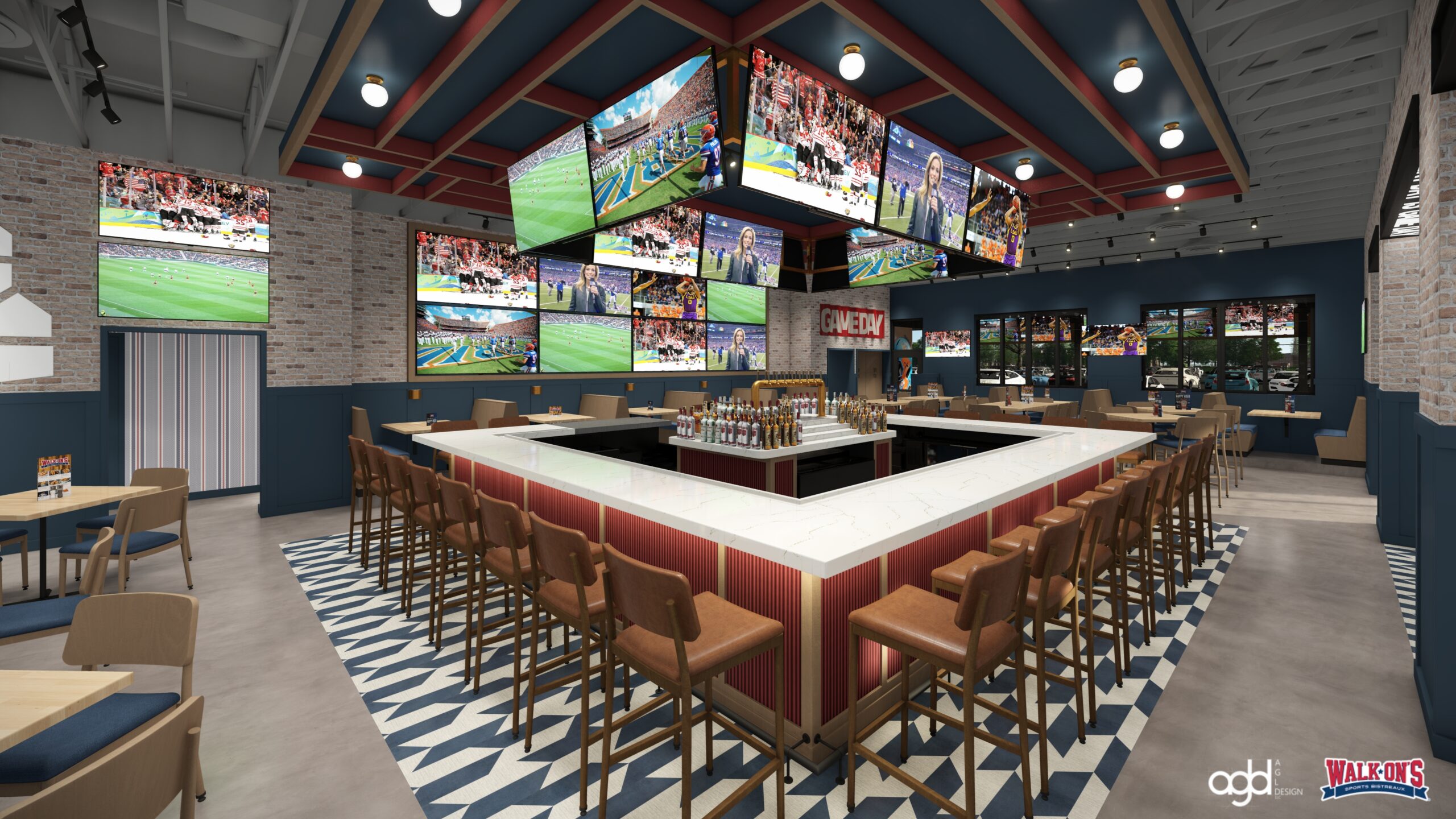
Walk-On’s Sports Bistreaux is testing whether a sports bar can feel bigger by becoming physically smaller.
The chain plans to open a company-operated restaurant at 8150 Perkins Road in Baton Rouge in early 2027. The location will introduce a 3,500- to 4,500-square-foot prototype, compared with the company’s traditional 7,000- to 8,000-plus-square-foot format.
That is not a cosmetic reduction. Walk-On’s is targeting a development investment below $2 million and says the format is designed for end-cap and in-line spaces that its larger buildings could not use.
The planned restaurant will be the ninth Walk-On’s in Baton Rouge and the 20th in Louisiana. Launching it close to home gives the company a controlled place to measure the format before franchisees take it into a wider range of markets.
The operating idea is straightforward: remove square footage that does not earn enough, simplify the kitchen and preserve the parts guests associate with the brand. The design emphasizes clear views of multiple screens, improved acoustics, takeout, catering and a more efficient back of house.
Restaurant Business reported that the smaller dining room is expected to hold approximately 125 to 140 seats, versus 270 to 300 in a traditional Walk-On’s. Founder Brandon Landry told the publication that a fuller smaller room could generate more consistent energy than a much larger room that is difficult to fill outside peak periods.
That is an important distinction. Sports bars do not sell only food and beverages. They also sell the feeling that something is happening in the room. A smaller box may reduce construction and operating demands while making the restaurant appear busier.
Walk-On’s also expects technology and equipment to carry more of the operating load. Restaurant Business reported that Taylor clamshell grills improved cooking speed and allowed one franchisee to operate a busy Friday kitchen with seven or eight people instead of 12 while improving ticket times. That is one operator’s reported experience, not a promise for every restaurant, but it illustrates the labor thesis behind the design.
Off-premise business is another part of the equation. About 20% of the chain’s sales already come from orders consumed elsewhere, according to Restaurant Business. Dedicated pickup areas allow the smaller prototype to serve some demand without assigning every order a dining-room seat.
The model could widen Walk-On’s development map. Smaller buildings can fit more trade areas, require less capital and may appeal to franchisees who cannot justify an 8,000-square-foot sports bar. The company also says the prototype is intended to respond to construction costs, labor pressure and inflation.
The tradeoff is capacity. A smaller restaurant can cost less and feel livelier, but it also has fewer seats available during major games and other peak occasions. Walk-On’s must prove that faster turns, off-premise sales and lower occupancy and labor demands can compensate for the revenue that a larger dining room might capture.
The first Baton Rouge opening will provide that evidence. Development cost, opening speed, sales per square foot, labor efficiency and guest satisfaction will matter more than the rendering.
Walk-On’s is not merely designing a smaller restaurant. It is testing whether the economics of a community sports bar can work in more places without losing the crowd, menu and atmosphere that make the concept recognizable.