Noodles & Company has given ramen a permanent place on its menu, but the word permanent needs a qualifier. The category is staying. Two of the three launch bowls—Gochujang Carbonara Ramen Noodles and Sweet Sesame Steak Ramen Noodles—are limited-time dishes, while the chain says new ramen creations will rotate into the platform over time.
The nationwide rollout began October 14 in restaurants, online and through the Noodles Rewards app. The third opening bowl, Spicy Korean Steak Ramen Noodles, adapts one of the chain's established flavor profiles to brothless ramen.
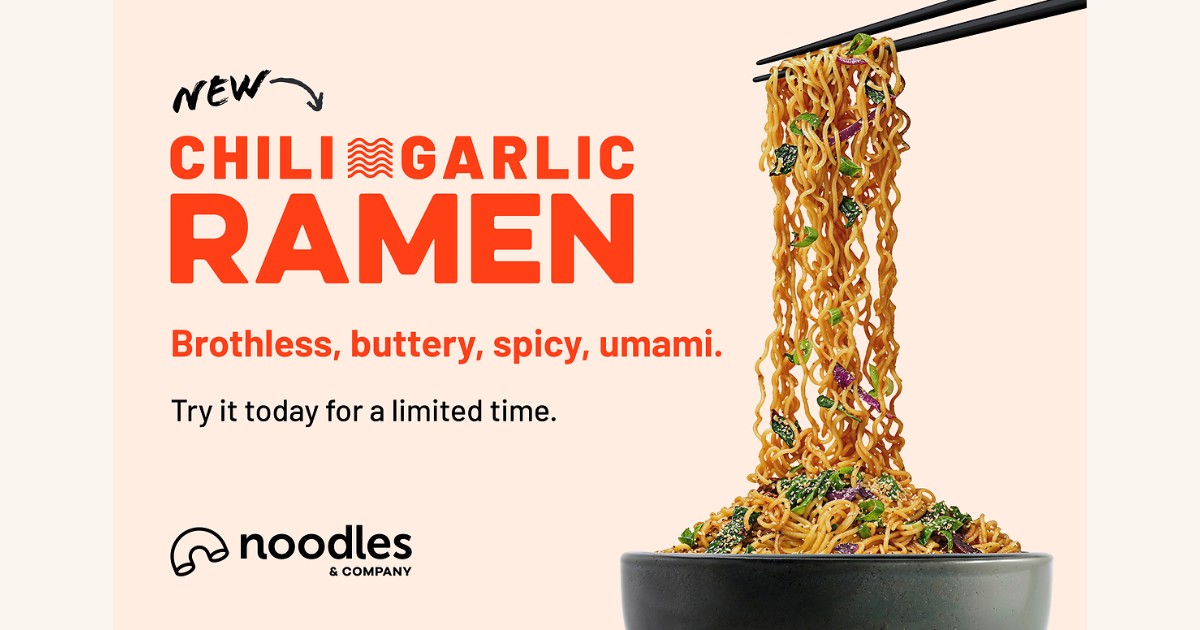
The decision follows last year's Chili Garlic Ramen test. Noodles says that limited-time item brought more than 156,000 new guests to the brand and ranked among its most successful menu launches. That is a company-reported acquisition figure; the release does not publish the measurement window, repeat rate, sales mix or margin.
The operating lesson is more useful than the headline. A limited-time offer can do three jobs: test a new ingredient platform, acquire guests and produce evidence for a longer menu commitment. Noodles is now keeping the platform while preserving flexibility to rotate the exact recipes. That can sustain novelty without making every launch SKU permanent.
The three bowls are deliberately distinct. Gochujang Carbonara combines a creamy gochujang-Parmesan sauce with bacon and cabbage. Sweet Sesame Steak pairs steak with carrots, red peppers, sesame and cilantro. Spicy Korean Steak uses a sweet-spicy gochujang barbecue sauce with steak, cabbage, spinach, cucumber, scallions and cilantro. All three are brothless, which fits the chain's sautéed-bowl operating model better than a traditional soup format would.
The launch release does not provide national prices, food-cost data, preparation-time changes or restaurant-level equipment requirements. It also does not say whether the 156,000 first-time guests returned after trying Chili Garlic Ramen. Operators should therefore read the acquisition claim as evidence of trial, not proof of durable retention.
Noodles also advertises a separate national rewards acquisition offer: new members receive a free regular entrée after a first purchase of at least $10. That program condition is not specific to ramen, and the company does not say the October launch changes it.
For Noodles, the new category broadens the brand without abandoning its core production logic. For peers, it is a clean example of an LTO-to-platform sequence: first test a culturally familiar format, then use guest-acquisition data to justify a permanent slot, and finally rotate flavors to avoid a frozen menu.
The next signal to watch is not whether social interest spikes during launch week. It is whether the category earns repeat orders after the two limited launch bowls cycle out—and whether Noodles reports enough data to separate trial from retention.