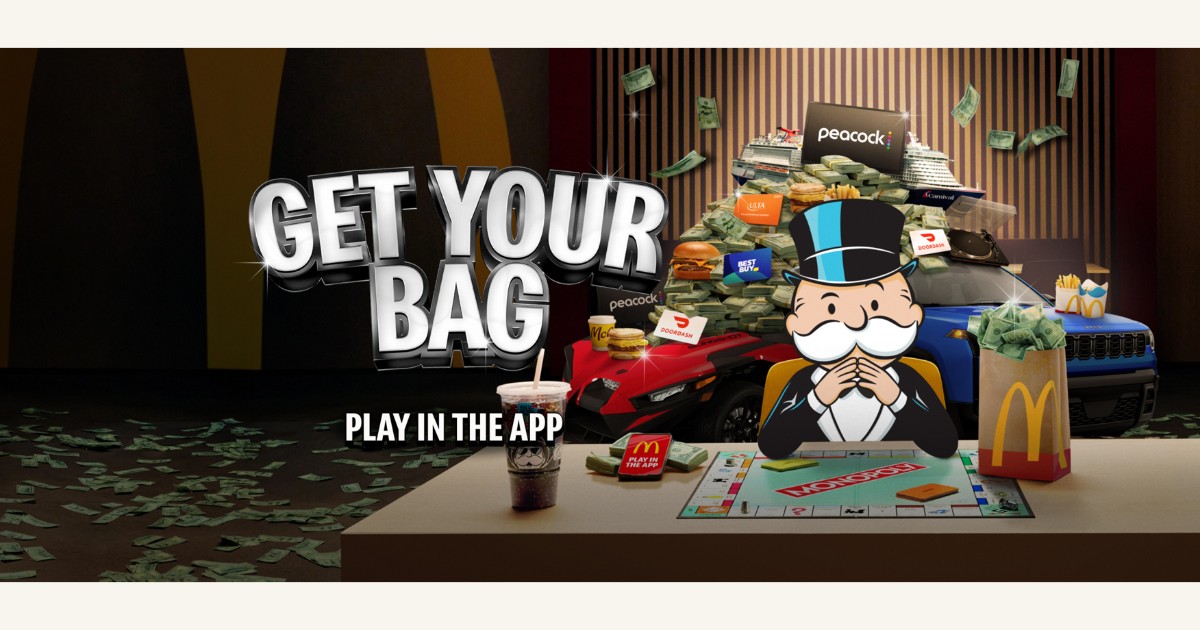
McDonald’s has started its 2026 Monopoly promotion, bringing back physical game pieces while using the app and loyalty program to control registration, bonus plays and prize claims.
The promotion began at 12:00 a.m. local time October 6 and runs through 11:59:59 p.m. local time November 1, while physical pieces last. It is open to legal residents of the 50 states and Washington, D.C., age 18 or older, who opt into MyMcDonald’s Rewards and register for the game in the McDonald’s app.
The most important instruction is easy to miss: registration must happen before the order. A customer who buys an eligible item through the app or uses a Rewards code can receive a bonus Chance Card play only if the game registration was completed first.
That sequencing turns the promotion into more than a familiar peel-and-win campaign. The physical piece creates the in-restaurant moment, while registration and bonus play move the customer into McDonald’s digital account system. For the company, the game is also a loyalty-acquisition and app-engagement tool.
A purchase is not required, and McDonald’s states that buying does not improve the odds of winning. Consumers can request a game piece by mail under the official rules. Mail requests must be received by November 2, with one request allowed per outer envelope.
The game caps activity at eight game-piece code entries and eight Chance Card plays per day, based on Eastern Time. The Chance Card game remains open through November 8, and the prize-claim deadline is November 22.
McDonald’s lists overall odds of 1 in 5, with most winning pieces awarding food. The prize pool also includes 50 Carnival vacation packages with a stated value of $10,000 each, five 2027 Jeep Cherokee Overland vehicles in the collect-to-win game and a $1 million Chance Card prize paid as $50,000 a year for 20 years without interest. Prize availability declines as awards are claimed, and Chance Card odds depend on the time of play.
For restaurant teams, the program creates several points where clear communication matters. Guests may assume every product has a game piece, that registration can happen after purchase or that a purchase is required. The official terms say otherwise. A concise explanation at the counter or drive-thru can prevent an app rule from becoming a service complaint.
The promotion also demonstrates how major chains increasingly combine value, entertainment and first-party data. McDonald’s is not offering one universal price cut. It is using food prizes, collectibles and a sweepstakes structure to create repeat visits while requiring a loyalty identity for participation.
That can be powerful, but it adds friction. A guest who does not register first can still receive a physical piece on an eligible purchase while supplies last, but can miss the bonus app play. The promotion therefore rewards customers who understand the digital process before they reach the order screen.
The practical takeaway is simple: register in the McDonald’s app before ordering, confirm the item is eligible and watch the separate deadlines for purchases, digital plays and prize claims. Those details—not the nostalgia—determine whether a guest actually gets every available play.