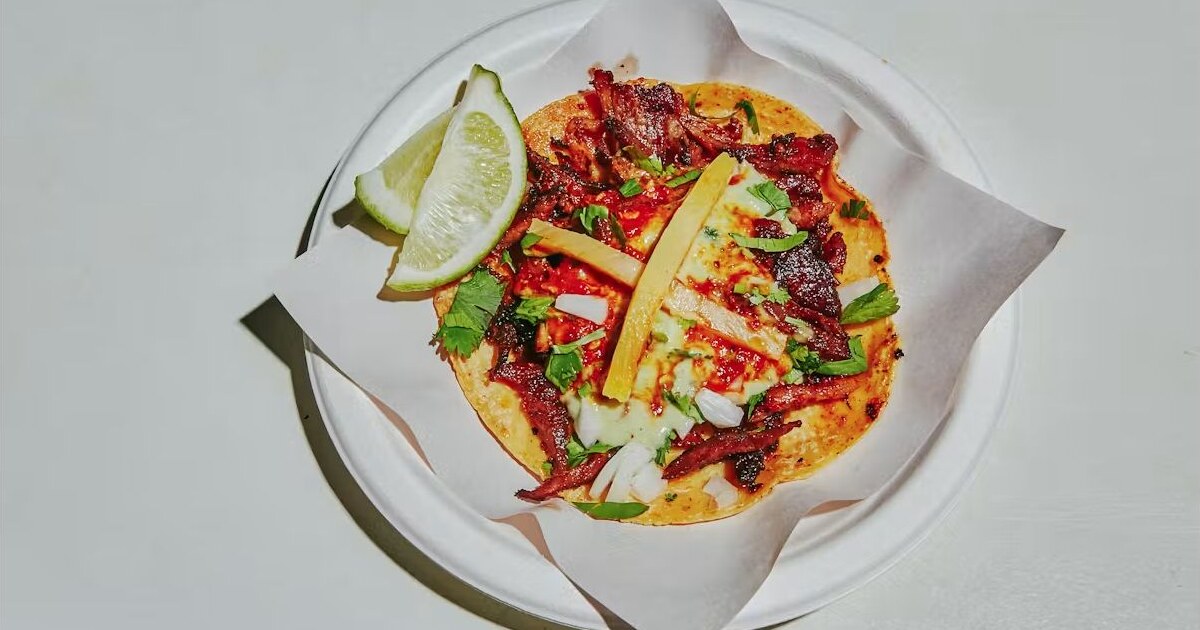
Los Tacos No. 1 built its reputation by keeping the proposition narrow: a short menu, tortillas made in-house and a fast, standing-room taco-shop experience.
Now that formula is getting outside capital.
The New York company announced September 3 that TSG Consumer has made a strategic investment in the business. The firms did not disclose the size of the investment, Los Tacos No. 1’s valuation or whether TSG received a majority or minority ownership position.
That missing information matters. This is clearly a growth transaction, but it is not evidence of a sale or a commitment to any specific number of restaurants. What the companies have confirmed is that co-founder and CEO Christian Pineda and chief operating partner Jacobo Ackerman will continue leading day-to-day operations and strategic decisions.
Los Tacos No. 1 started in 2013 with a stand in Chelsea Market. Its founders came from Tijuana, Mexico, and Brawley, California, and built the concept around tacos, quesadillas, aguas frescas, family recipes and fresh ingredients. The company now operates 10 locations across New York City, plus the Los Mariscos seafood concept in Chelsea Market.
The investment puts a disciplined regional brand at a familiar restaurant-industry crossroads. A concept can attract capital because it has become distinctive. The same capital then creates pressure to reproduce that distinction in more places, through more managers and across a larger supply chain.
TSG brings experience from consumer and restaurant brands. The firm says it manages approximately $14 billion and identifies Dutch Bros, Yard House and Pura Vida Miami among its restaurant investments. That history supplies expansion knowledge, but it does not guarantee that one growth playbook will fit another concept.
Los Tacos No. 1 has fewer moving parts than many restaurant brands. Its focused menu can support purchasing discipline, training and speed. Its name also carries strong recognition in New York. Those are advantages when opening new stores.
They are not automatic protection against dilution. A hand-pressed tortilla, a tightly run line and a lively shop are operational details, not simply design elements. Reproducing them depends on site selection, employee training, ingredient standards and managers who understand why the original system works.
The companies have framed the partnership around reaching a wider audience while keeping the food and shops true to their roots. That is the correct standard, but it remains a goal rather than a measured result.
The next useful evidence will be concrete: which markets Los Tacos No. 1 chooses, whether the company expands outside New York, how quickly it opens, and whether existing leadership can build a deeper operating bench without adding unnecessary complexity.
For now, the deal says that private equity sees more growth inside a celebrated 10-unit taco business. The harder question comes after the checks clear: can Los Tacos No. 1 become easier to find without becoming less recognizable?