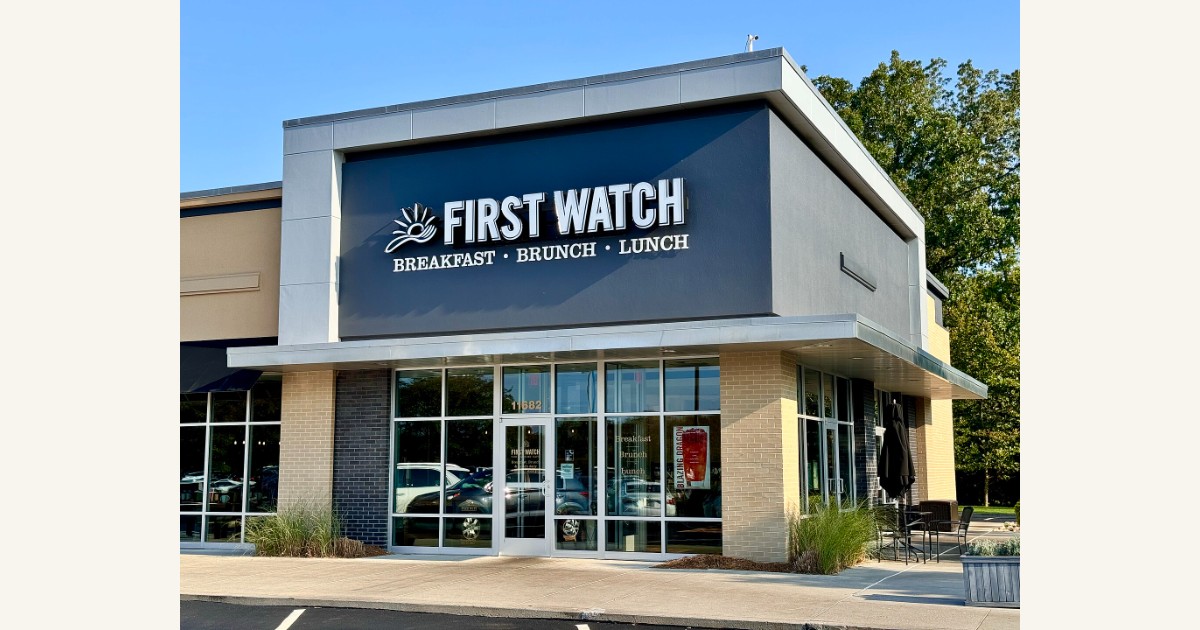
First Watch ended its third quarter with 681 restaurants across 33 states after opening 16 systemwide locations in 11 states. The estate now includes 601 company-owned restaurants and 80 franchised restaurants.
That expansion helped push total revenue up 10.7% to $349.9 million and systemwide sales up 10.9% to $391.2 million for the 13 weeks ended September 27. But the same-restaurant measures tell a more restrained demand story: comparable sales rose 1.0% while comparable traffic fell 1.9%.
The split matters because First Watch’s revenue growth is not the same thing as established-store guest growth. New restaurants, acquired restaurants and pricing or mix can lift the top line even when visits at mature locations decline. The company defines its comparable base as company-owned First Watch restaurants open at least 18 months at the beginning of the fiscal year; 454 restaurants were in that base for the 2026 quarter.
First Watch did not publish a transaction-level bridge showing how much of the 1.0% comparable-sales increase came from menu price, mix or other factors. It would therefore be an inference to call the difference between sales and traffic a precise average-check increase. The disclosed result only establishes that sales at comparable restaurants edged higher while traffic counts moved lower.
Profit growth was stronger than the traffic line. Adjusted EBITDA rose to $39.7 million from $34.1 million, and the company raised its full-year outlook to approximately $136 million, the high end of its previous range. Restaurant-level operating profit increased in dollars to $67.3 million, but its margin slipped to 19.4% from 19.7%.
The expansion plan remains capital intensive. First Watch expects 60 net new systemwide restaurants for the full year, a figure built from 53 company openings, nine franchise openings and two company closures. It also projects about $145 million of capital expenditures, primarily for new restaurant projects and planned remodels. Those are outlook figures, not completed 2026 results.
The unit-count arithmetic deserves the same care as the traffic line. The 681 total is an exact quarter-end system count disclosed by the company. The 16 openings occurred during the quarter, while the 60-unit outlook is a net full-year target that already includes two expected closures. They should not be added together.
For operators and investors, the useful benchmark is the balance between estate growth and mature-store demand. Opening 16 restaurants in 11 states demonstrates a repeatable development machine, and double-digit revenue growth shows that the larger system is producing more sales. Negative comparable traffic means the company still has to protect visit frequency while absorbing the operating and capital demands of expansion.
The next proof points are straightforward: whether fourth-quarter traffic improves, whether the company reaches 60 net openings after the two planned closures, and whether restaurant-level margin stabilizes as the newest cohort ramps. First Watch’s third quarter is a growth story, but it is not a traffic-growth story.