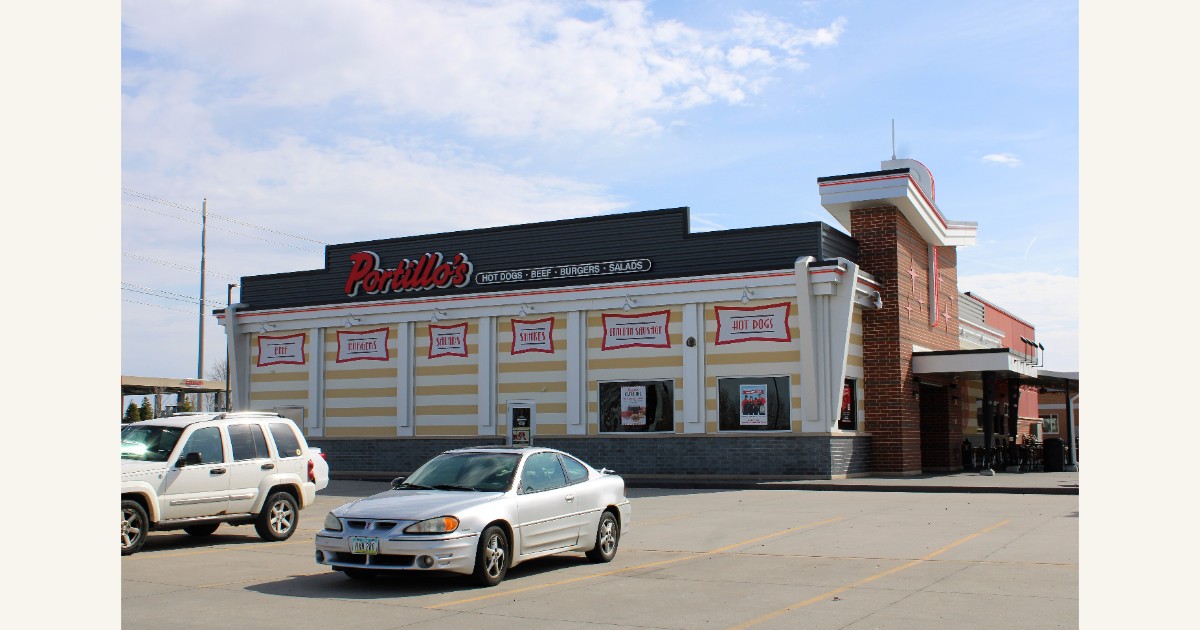
Portillo’s is tightening both ends of its restaurant portfolio. The chain expects to close a mid-to-high single-digit number of underperforming restaurants outside Chicagoland, while a new prototype planned for 2028 openings will be more than 40% smaller than its previous average restaurant.
Most of the closures are expected in the fourth quarter of 2026. Portillo’s did not identify the restaurants, publish exact closure dates or provide an exact unit count in the November 5 release reviewed by Braisepoint. The company said it evaluated sales, restaurant-level margins and projected operating performance for each location.
That makes the plan a portfolio reset rather than a retreat from growth. Portillo’s said it still expects eight new units in 2026 and plans to ramp annual new-restaurant growth to a high-single-digit percentage over the next three years. The chain reported 109 restaurants as of the release, including one restaurant owned through a 50%-owned joint venture.
The development model is also changing. Portillo’s said its 2028 prototype will be about 4,600 square feet and require roughly 1.5 acres. The company compared that with a historical site requirement of about 3 acres and said the building will be more than 40% smaller than its previous average restaurant.
Smaller does not automatically mean cheaper or more productive. Portillo’s said the design will use an optimized kitchen, standardized construction and greater site flexibility, but it did not disclose a prototype investment budget, expected labor savings, throughput target or average unit volume. The company set a financial target instead: all new restaurants beginning in 2028 are expected to target cash-on-cash returns above 20%.
For developers, the acreage reduction may be as important as the building reduction. A 1.5-acre requirement can widen the pool of viable sites relative to a 3-acre format, particularly in infill and adjacent markets. It also can reduce land exposure, but actual economics will depend on local rents, parking, drive-thru configuration, construction and sales.
Portillo’s paired the format work with tighter underwriting. New sites will have to pass market and location reviews and meet cash-on-cash return standards. The chain said it will balance infill in existing markets with expansion into strategically adjacent markets rather than treating whitespace alone as sufficient evidence for a deal.
The quarter provides some operating context. Revenue increased 7.0% to $194.1 million, and same-restaurant sales increased 1.4%. Average check rose 2.1%, while transactions fell 0.7%. The average-check increase was driven by about 2.1% menu pricing, which means positive comparable sales did not represent positive transaction growth.
Portillo’s also reported $1.4 million of restructuring charges tied to a workforce reduction at its Restaurant Support Center. That cost sits alongside the restaurant closures and new format as part of a broader effort to right-size the company and strengthen returns.
The closure count should not be guessed. “Mid-to-high single digit” is guidance, not an exact number, and the company has not published the affected addresses. The event date and unitCount fields in Braisepoint’s intelligence record therefore remain empty until those details are explicitly verified.
For operators, the strategic logic is clear: remove restaurants with weak projected economics, tighten site selection and lower the capital footprint of future growth. The open question is execution. Portillo’s must show that a smaller box preserves the volume, throughput and experience that support its brand.
The next useful disclosures are the exact closure list, associated charges, the prototype’s build cost and the sales and labor assumptions behind the greater-than-20% cash-on-cash return target. Until those appear, the plan is best understood as a capital-discipline framework with material details still to come.