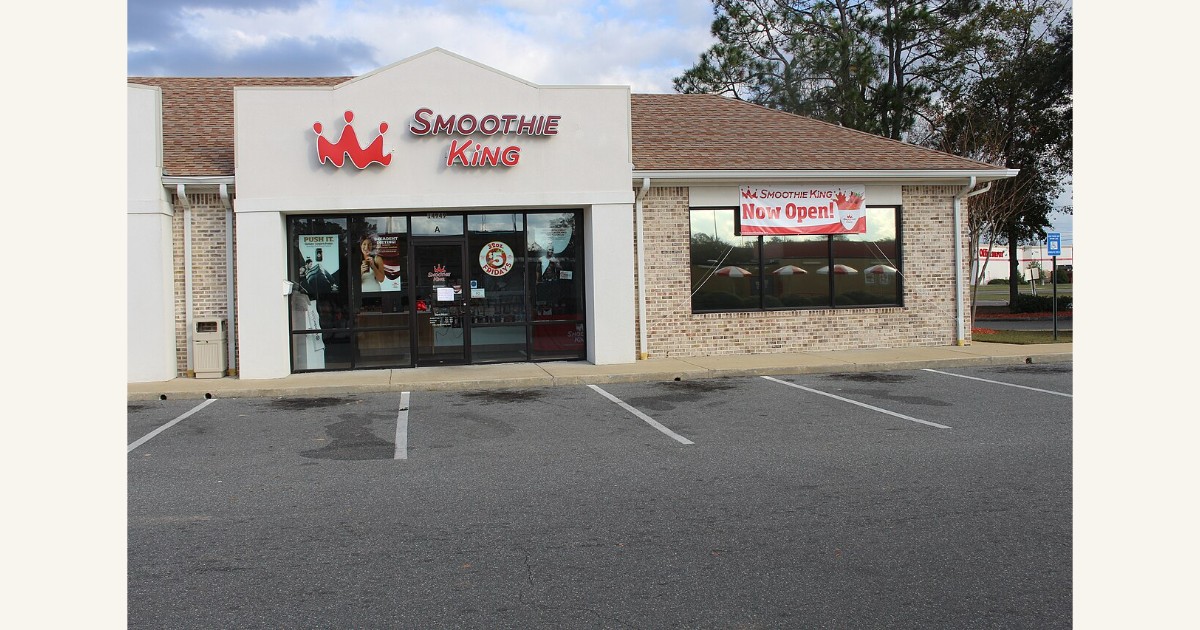
Smoothie King says comparable-store sales rose 8.7% in the third quarter of 2026, accelerating from 5.9% in the second quarter while same-store visits also increased. For a brand built around smoothies, the more consequential part of the announcement may be how strongly management is leaning into food, operating technology and new-unit development.
The privately held chain reported that comparable sales reached 11.6% in August after the July launch of Chicken Flatbreads. Smoothie King said guests are increasingly pairing food with smoothies as a complete meal, following the 2025 introduction of its nationwide Power Eats menu. That strategy expands the brand beyond beverage occasions and gives franchisees another way to grow check and frequency without relying solely on smoothie pricing.
The release does not quantify the food sales mix, bundle penetration, average-check contribution or the exact increase in customer visits. It also does not provide restaurant-level distribution or a definition of the comparable-store base. Because Smoothie King is private, the results are not accompanied by the financial statements and filing detail available from public restaurant companies. The 8.7% figure and positive-traffic statement should therefore be attributed to the company.
Smoothie King compared its result with reported quarterly comps from Starbucks, Chipotle and Cava. The comparison is directionally interesting but not perfectly like-for-like. The brands use different fiscal calendars, concepts, comparable-store definitions and geographic scopes. Smoothie King’s release compares its company-reported system result with Starbucks’ U.S. coffeehouse measure and the public chains’ disclosed comparable sales. Braisepoint is not treating the ranking as a standardized industry league table.
Expansion continued alongside the sales growth. Smoothie King opened 13 restaurants in the quarter and added 39 store-opening commitments across 16 states. It also identified multi-unit development agreements in Chicago, Cincinnati, Cleveland, Louisville, Fort Smith and Salt Lake City. The company says it now has more than 1,250 U.S. locations. Commitments are pipeline agreements, not open restaurants, and no individual opening schedule was supplied for the six named markets.
The company also described two operating-technology investments. Its internally funded Blended Intelligence Dashboard consolidates sales, labor, cost of goods, guest feedback and loyalty information for franchisees. Smoothie King said an AI-driven inventory and scheduling platform is now deployed across its stores, using sales forecasts to support ordering and staffing.
Those tools could matter to unit economics, but the announcement provides no quantified waste reduction, labor savings, forecast accuracy or franchisee profitability improvement. The same discipline applied to sales claims should apply to the technology: the rollout is verified; its financial effect remains undisclosed.
The operator takeaway is the combination rather than any single headline number. Smoothie King is attempting to turn a beverage visit into a meal occasion, use systemwide data to manage the added complexity and keep expanding the franchise base at the same time. If the food platform is truly driving both check and traffic, future disclosure should show the food mix, repeat rate and restaurant-level margin effect. Those measures would tell operators whether this is a durable occasion expansion or a strong launch period.