Lettuce Entertain You Restaurants is starting its new Bilt Neighborhood OS partnership at a single Chicago restaurant, making the initial scope much narrower—and more measurable—than the hospitality group's 110-plus-restaurant footprint might suggest.
The first location is RPM Italian at 52 West Illinois Street in Chicago. Lettuce and Bilt say the system could expand to other Lettuce restaurants over time, but they have not announced a second site, a rollout schedule or a committed number of restaurants.
That distinction matters. Lettuce operates, manages or licenses more than 110 restaurants across more than 60 concepts. Those numbers describe the potential organization behind the pilot, not the installed base of the Bilt technology.
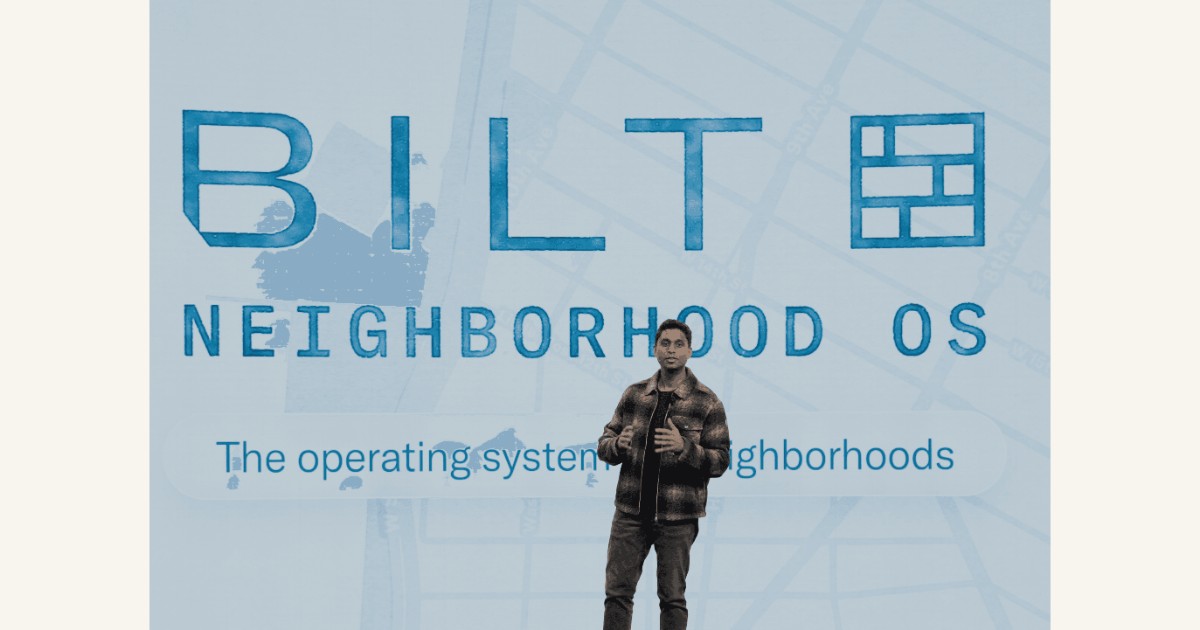
Bilt is positioning Neighborhood OS as a layer that works across systems a restaurant already uses, including reservations, point of sale, payments, customer relationship management and loyalty. The stated goal is to help participating restaurants reach nearby apartment residents, office workers, hotel guests and sports fans, then recognize those customers, apply eligible benefits and measure the spending connected to a campaign.
For Lettuce, the most consequential question is how that layer interacts with its own Frequent Diner Club and LettuceEats app. The companies say they will explore ways to connect Bilt's neighborhood network with those existing programs. They do not say that the systems are already integrated, which data fields will move between them or which platform will remain the source of truth for guest identity and rewards.
Bilt describes the wider product as an AI-powered commerce platform. Its agents can help manage reservations, guest services, customer communication and marketing across connected systems. Bilt says its AI agents completed more than 2 million real-world actions across more than 29,000 businesses in the 30 days before the announcement, with 91% completed without human intervention.
Those are Bilt network metrics. They are not performance results from RPM Italian, Lettuce or any restaurant-specific deployment. The partnership announcement supplies no pilot conversion rate, incremental visit count, average check, repeat rate, labor savings or guest-satisfaction measure.
That leaves the pilot with a clear opportunity and an equally clear proof burden.
The opportunity is local demand that restaurants often cannot identify through their own loyalty database. A hotel guest, apartment resident or sports fan may be close enough to visit but absent from the restaurant's marketing list. Bilt's network could give a participating restaurant a way to make a targeted offer, recognize the customer at checkout and connect the offer to a measured transaction.
The proof burden is attribution. The system will need to show that a visit was generated by the neighborhood channel rather than merely rewarded after it would have happened anyway. It also must avoid creating a maze of overlapping loyalty identities, point credits and offer rules for restaurant staff to explain at the host stand or checkout.
Bilt's broader coalition includes payments, point-of-sale, reservation and restaurant-commerce companies such as Adyen, Clover from Fiserv, Grubhub, Mastercard, OpenTable, Shift4 and Verifone. Bilt says integrations and capabilities will roll out in phases beginning in 2027. That partner list indicates distribution ambition, but it does not identify which connector RPM Italian will use first.
The companies also have not disclosed fees, revenue-sharing terms, exclusivity, implementation costs, marketing subsidies, data-retention rules or the duration of the RPM Italian test. Those omissions do not make the partnership weak; they define what an operator needs to ask before treating it as a proven restaurant growth channel.
For now, the most accurate description is a one-restaurant launch inside a large restaurant group. RPM Italian gives Bilt a visible test bed and gives Lettuce a way to evaluate neighborhood-driven acquisition without committing the full portfolio. The next useful update will be a named second restaurant or a measured result from the first—not the size of the network that could eventually follow.