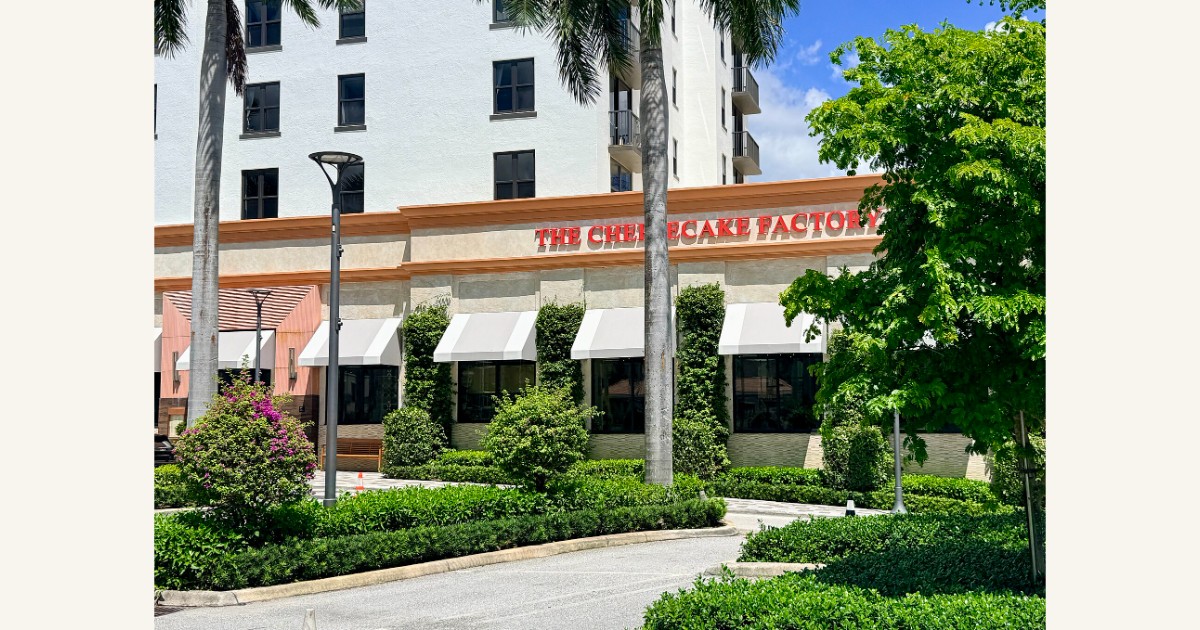
The Cheesecake Factory reported a 15.2% comparable-sales increase at its namesake restaurants in the third quarter, but the more useful operating detail is how management described the result. The company said labor productivity and food efficiency improved year over year while sales accelerated.
Total company revenue reached $1.0334 billion for the quarter ended September 29, up from $907.2 million a year earlier. Net income was $61.3 million, or $1.19 per diluted share. The company described the revenue result as a quarterly record.
Management said comparable sales and traffic at Cheesecake Factory restaurants meaningfully outperformed the broader casual-dining industry. It did not disclose a traffic percentage in the earnings release, so the claim is directional rather than a quantified independent comparison.
The company connected demand to several initiatives: menu innovation, its rewards program and significant social-media engagement. Those channels serve different jobs. Menu changes can create visit occasions, loyalty can improve frequency and data capture, and social reach can extend awareness without relying only on discounting.
The labor point is important because higher sales do not automatically produce better execution. Chairman and CEO David Overton credited experienced operators for food quality, service and hospitality, and said year-over-year gains in labor productivity and food efficiency supported profitability. The release did not provide restaurant-level labor percentages or a productivity target.
Development continued alongside the comp gain. The company opened six restaurants during the third quarter: two Cheesecake Factory restaurants, one North Italia, one Flower Child and two Fox Restaurant Concepts locations. After quarter-end, it opened two additional Flower Child restaurants and one FRC restaurant.
Management still expects to open as many as 26 restaurants in fiscal 2026, including as many as five Cheesecake Factory restaurants, eight North Italia locations, seven Flower Child locations and as many as six FRC restaurants. That mix makes the quarter a portfolio story as well as a namesake-brand story.
For operators, the result offers a cleaner benchmark than a sales headline alone. A 15.2% comp can create labor leverage, but only if scheduling, throughput and service quality hold as volume rises. Cheesecake Factory says productivity improved; the next useful evidence will be whether that continues as new restaurants and multiple growth concepts add training and field-support demands.
The remaining caution is attribution. The company named menu, rewards, social engagement and operational execution, but did not isolate how much each factor contributed. Braisepoint therefore treats the quarter as evidence of strong demand and better company-reported productivity—not proof that any single marketing or labor program caused the result.